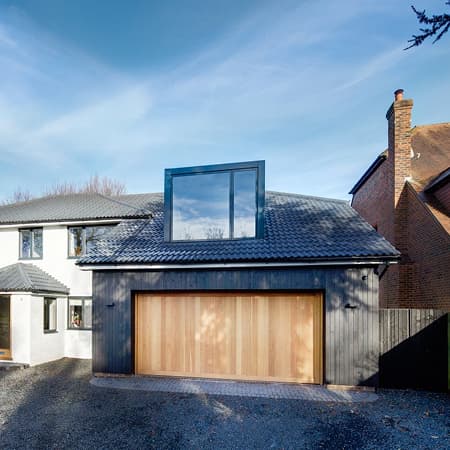
RCC doesn't take on ground-up custom home construction — that's a different business with a different risk profile, and there are North Georgia builders who do it well. What RCC does do is the largest end of the renovation market: full additions, second-story additions, in-law suites, and whole-home remodels that touch every room in the house. The planning effort for those projects is closer to a new build than to a kitchen remodel, and a lot of the cost certainty depends on getting that planning right.
Here's how Ryan walks the planning phase with North Georgia homeowners stepping into a major addition or full-house renovation.
Step 1: Define the budget honestly
Before any drawings, before any design conversations, the budget needs a real number — not a wish, a number you'd actually sign a contract for. In 2026 North Georgia, the rough order-of-magnitude floors are:
- Major addition (500–1,200 sq ft): $250 to $475 per square foot all-in, including new foundation, framing, roofing, electrical, plumbing, HVAC tie-in, finishes, and tie-in to existing structure.
- Second-story addition: $300 to $550 per square foot. Foundation and existing structure usually need reinforcement, which adds 15 to 25 percent on top of a same-footprint addition.
- Whole-home remodel (no addition): $175 to $350 per square foot of existing home, depending on how many systems get touched and how many walls move.
A 10 to 15 percent contingency on top of those numbers is what survives a real project. The contractor who quotes you a number with no contingency is either not planning to find anything or is going to deliver the news as change orders later.
For more on what specific costs land where, see the home addition cost per square foot guide.
Step 2: Pick the team before the drawings
The single biggest planning mistake Ryan sees: a homeowner buys architectural drawings from a designer who has never built in North Georgia, then shops them to contractors. The drawings come back unbuildable in this market — wrong foundation type for the soil, wrong wind-load assumptions, wrong moisture-management details for the climate — and the homeowner pays twice to redo them.
Pick the contractor and the designer at the same time, or pick the contractor first. The designer needs to know:
- Georgia Building Code wind zone (130 to 150+ mph depending on coastal proximity)
- Local soil type — sandy fill, expansive clay, or marl all need different foundation details
- Local impact-glass and shutter requirements
- Termite pre-treatment and moisture-barrier requirements
- HVAC sizing for North Georgia humidity (oversized AC dehumidifies poorly)
A designer who's built in North Georgia bakes these in from day one. A designer importing a plan from a different climate produces drawings that fail plan review the first time.
Step 3: Understand which permits, in what order
A major addition in Clay or Hall County typically requires:
- Building permit (the main one) — plan review, fees scale with construction value
- Electrical permit — separate, can be sub-permit under the building permit
- Plumbing permit — same
- Mechanical permit (HVAC) — same
- Notice of Commencement (NOC) — required for any project over $5,000; filed with the county clerk before work begins; protects the homeowner against double-payment liens
- Septic / well permits (if applicable) — Clay and rural Hall addresses
- Stormwater / impervious surface review — if the addition adds significant footprint
The Notice of Commencement is the line item most homeowners miss. It's a Georgia-specific document that, if not filed, exposes the homeowner to mechanic's liens from sub-contractors even if the GC has been paid in full. RCC files the NOC as part of the standard project setup — but if you're hiring a contractor who skips it, that's a serious warning sign.
For Habersham County specifics, see the home addition cost & permits guide.
Step 4: Sequence the design freeze
For a major addition or whole-home remodel, finishes alone are 60+ selection decisions: floor in each room, cabinet style and color for two or three rooms, three or four counter materials, tile patterns and grout colors for every wet area, paint colors for every room, every interior door style, every exterior door, hardware, lighting fixtures by room, plumbing fixtures, appliances, switches and outlet plates.
If those aren't decided before demo starts, you'll lose 2 to 6 weeks in the middle of the project waiting on selection. The contractor who walks you through a selection package before contract is buying you back that time.
Ryan's sequence:
- 8 to 12 weeks before demo: finishes selection meetings begin. Cabinet shop visits, slab yard visits for stone, tile shop, plumbing fixture showroom.
- 6 weeks before demo: all selections locked. Long-lead items (custom cabinets, imported stone, specialty windows) get ordered.
- 4 weeks before demo: permit submitted. Plan review in North Georgia counties typically runs 2 to 6 weeks depending on workload.
- Demo day: every decision is on paper. Field decisions are limited to "this dimension differs from the drawing by 1/4 inch — adjust trim profile."
Step 5: Plan for living through it
The question Ryan asks every whole-home client at the planning meeting: where are you living during construction? The honest answer determines a lot of sequencing decisions.
- Living on-site: the project has to be sequenced so one bathroom and one bedroom stay operational at all times. The schedule grows by 15 to 25 percent and the dust-containment cost goes up significantly. Some scopes (a major HVAC change, for example) can't be done with the family on-site at all.
- Living off-site (rental, family, second home): the project can run flat-out, all rooms simultaneously, fastest possible schedule. Cost is lower per week of construction but you're paying for the alternate housing.
A whole-home remodel that runs 6 months while the family lives in it is sometimes 8 months instead. Ryan's standard recommendation for a true whole-home: plan to be out for the structural and rough-in phases (typically the first 3 to 4 months), back in for finishes if you want. The math usually works.
Step 6: Confirm the warranty and lien releases
Before final payment on a major project, two documents matter:
- Final lien release from every subcontractor and material supplier who was paid out of the project. Without these, a sub can still file a lien against the property even after the GC is paid in full.
- Workmanship warranty from the GC — RCC's is one year on workmanship, with manufacturer warranties pass-through on materials. Different states and different contractors offer different terms. The warranty is only as good as the contractor still being in business; check the GA DBPR for license history.
Related reading
- How to Choose the Right Contractor — license verification and what to ask before signing
- Home Addition Cost Per Square Foot in Gainesville — cost breakdown by type
- Home Addition Permit by County in North Georgia — county-by-county permit walkthrough
- Master Suite Addition Cost and Process — specific to the most-common addition type
- Home Additions — RCC Construction — what's included in a RCC-led addition
Ready when you are.
Tell me about your project — you'll see your real budget estimate mid-flow, and I'll call within 24 hours. No spam, no call center, just me.